
Lakewood Busted Arrest Records
The Lakewood Police Department handles policing for the city itself. Its public Crime Statistics page offers an interactive map and aggregate numbers. That page is not a booking log. There is no name-by-name arrest list there. No weekly blotter. No photo gallery. City Manager bulletins sometimes carry public-safety totals in broad form, but those figures never become a searchable list of who was arrested.
This gap trips people up. An empty result on a city crime map tells you nothing about whether anyone was booked or charged. Lakewood Police may keep an incident or investigative file, while a contract jail holds the current-custody answer. Court jurisdiction shifts too. To match a person to a record, you need a date, an incident number, or some other solid detail. Guesses drawn from summary crime data will not cut it.
Where Lakewood Busted Mugshots Appear
Lakewood publishes no city arrest-photo gallery. There is no public name roster either. Go to official sources first, because they point you to the agency or holding system that controls the record. The real question is not whether a generic county result exists. It is where the person ended up after the Lakewood arrest.
| Channel | Record or scope | Public photo? | Official status | Use it for |
|---|---|---|---|---|
| LPD Crime Statistics | Aggregate reports and crime map, no named roster | No public photo display | Official | Area-level incident context |
| Pierce County LINX | Current Pierce County custody fields | No public booking photos | Official | Check a person held at Pierce County Jail |
| Puyallup City Jail roster | Current municipal roster when that facility is the holding location | No public booking photos | Official | Check the applicable contract placement |
| The News Tribune | Selected Lakewood and county reporting | Not a routine booking-photo source | Secondary | Event context, then official confirmation |
The News Tribune covers incidents as news, not as a standing booking index. The countywide secondary pages sit in the same boat. That includes BustedNewspaper, RecentlyBooked, and Mugshots.com. None of them are Lakewood agency records. Any entry can be stale or missing people. Treat a news story or third-party listing as a lead. Confirm it against the official roster for the right facility, then against the court file, before drawing any conclusion.
Busted in Lakewood: Find Custody
Who is in custody right now is a narrower question than whether Lakewood Police made an arrest. The Lakewood Municipal Court roster materials name two contracted jail-service providers: Pierce County Jail and Nisqually Corrections. City agreement documents also show placement arrangements with Puyallup City Jail. So the first move is to check the known or likely facility. A blanket claim that every Lakewood arrest lands in Pierce County Jail simply does not hold.
- Start with any reliable detail from the arrest, such as the date, arresting agency, facility, or case number.
- Use LINX when Pierce County Jail is the relevant placement and search in last-name, first-name order.
- Use Puyallup's official roster if Puyallup City Jail is the known holding location, then use the appropriate official roster for another contracted facility.
- Check the court path for hearings or disposition instead of treating a current roster result as the final case outcome.
Someone who has been released will not show up on the Pierce County roster. A no-result can also mean a different contract facility. Or it can mean a custody path outside these systems entirely. The Pierce County custody reference walks through current-roster limits, the county's text-only photo policy, and the separate court-search route.
Note: The holding location, not the city where an arrest occurred, determines which lawful current-custody roster is most useful.
Lakewood Police Records
Want an LPD report, agency photograph, or investigative file? Use Lakewood's public-disclosure instructions and NextRequest portal, or ask in person at City Hall or the police department. A tight request works best. Give a name where appropriate, the incident date, the location, a case number, and the specific record you want. Keep in mind that an agency police record is separate from the jail's custody record, and the Public Records Act plus its exemptions still governs what gets released.
Lakewood Police Department
9401 Lakewood Drive SW
Lakewood, WA 98499
Administration: (253) 830-5000
Non-emergency: (253) 287-4455
Public office hours: Monday through Friday, 8:30 a.m. to 5 p.m.
For incident reports, CAD logs, and 911 audio, Lakewood points requesters to South Sound 911. That agency does not hold investigative files or photographs. The city's adopted 2025 fee schedule sets costs plainly. Paper pages run $0.15 each. Scanned pages cost $0.10. Four electronic files cost $0.05, and each gigabyte adds $0.10. Body-camera redaction runs $0.77 per minute. Media or postage bills at actual cost. Whatever estimate the portal gives, plus any lawful exemption, controls the request.
Washington's Public Records Act gives an agency five business days for a first response. That response could take several forms. It might be the records themselves, a time estimate, a clarification question, or a denial citing an exemption. Day five is not a delivery promise. Lakewood's fee schedule also leaves untouched any confidentiality rules over a jail record held by a different custodian.
Lakewood Contract Booking Routes
Lakewood does not run its own jail, so bookings scatter across several contracted facilities. The Municipal Court's roster page points to Pierce County Jail and Nisqually Corrections as service providers. Puyallup City Jail also appears in documented City arrangements, and older County agreement material names Pierce County Jail for Lakewood felony bookings. So no single address covers every Lakewood booking. You have to check facility by facility.
Custody status matters more than you might think. A roster only shows who is held at that facility right now. Someone listed today may be released tomorrow, moved elsewhere, or booked through a different lawful placement altogether. It is not a permanent arrest archive. For filings, hearings, and judgment, the court docket is the record that counts.
The Pierce County roster is current-only too. It leaves out people already released. No numerical update interval has been published, and there is no 24-hour new-bookings page or released-person archive. Lakewood's City crime map cannot fill that gap either. Each tool does one job: a roster for present custody, the police or records office for agency material, and the court file for what happened after booking.
Lakewood's official crime-statistics interface shows where the public-data line sits. It pulls together neighborhood statistics rather than listing people in custody. The image below captures that official interface. It is not a booking-photo display.
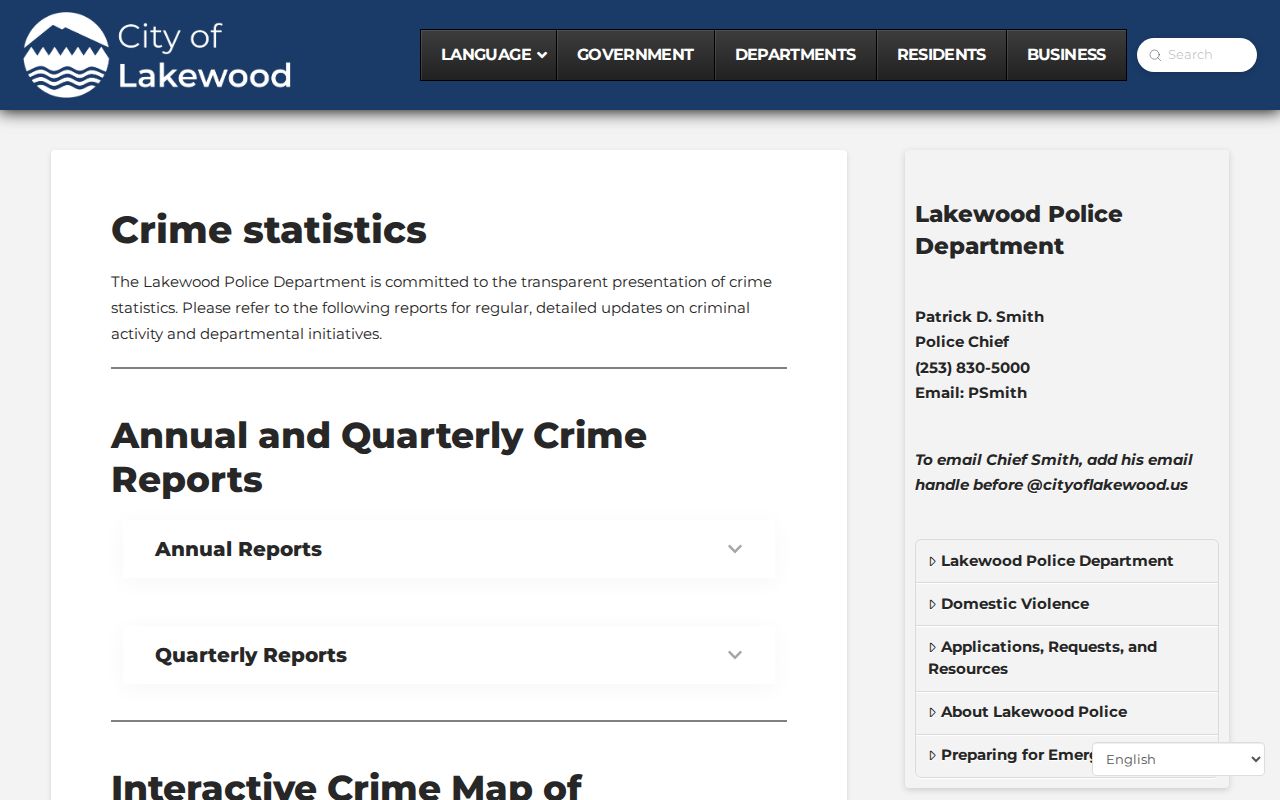
Because that map aggregates rather than identifies, a specific record question needs a records request or the right facility roster. That boundary also keeps a general crime map from turning into a roll call of people accused of offenses.
Why Lakewood Busted Searches Need Multiple Rosters
Puyallup and Lakewood show that city routing inside Pierce County follows no single template. Puyallup keeps its own adult City Jail roster. It adds separate bookings and releases views. Lakewood does the opposite. Custody questions there run through several contracted facilities, and that local fact changes the order of a proper lookup rather than just complicating it.
Start with a facility when reliable arrest or court information names one. If placement is unclear, Pierce County LINX is a sensible official check. Still, it is not conclusive for every Lakewood custody question. An empty roster search never proves that no booking occurred. The record may sit at a different facility, be gone because of a release, or exist only through the responsible agency or the courts.
The county's public roster fields can include name, booking date, charge, warrant type, charging agency, court jurisdiction, court date, bail, sentence information, and release date. Read those as booking and custody data, nothing more. They help you spot the right case or agency when the contract route is uncertain. The court file remains the place for the final disposition.
Note: Lakewood's contract-facility routing is distinct from Puyallup's municipal jail system, even though both cities are in Pierce County.
Lakewood Arrest News and Case Follow-Up
The News Tribune covers selected Lakewood and Pierce County events. Its reporting draws on police statements, court records, public records, and later coverage. It works well for context when an incident makes headlines. It will not hand you complete custody data or a daily photo index. A brief account can shift once charges are filed, dropped, changed, or resolved at trial.
To follow a case after a news item, start with the arresting agency and any known facility. Check the relevant current roster next. Then use LINX or the court of record for proceedings and outcome. The county's Crime News source map keeps official communications separate from secondary reporting and preserves the booking-to-court distinction.
Lakewood has no city booking log. That gap does not invite a commercial index or a news search to stand in for official records. News can point you to a date, an event, or a public statement. It cannot confirm current custody, show whether everyone involved was booked, or reveal the final court outcome. The responsible agency and court answer those questions.
For a known court case, keep the case number handy. Confirm the court jurisdiction named in the roster or agency material too. Judicial files follow local court access rules, not a police-records request alone. That matters most when an arrest report and a custody search describe different points in time.